
Georgia Concrete Pros · Services
Concrete driveway contractors in Georgia
We pour new driveways, replace cracked and heaving ones, and extend driveways that are too tight for a second car, on a compacted base with the joints and finish done right.
How we do it
- 1
Estimate and layout
We measure the drive, check the slope toward the street and the garage, look at where water goes today, and mark the new edges. You get a written estimate with thickness, base, reinforcement and finish spelled out.
- 2
Tear-out and grading
The old concrete, asphalt or gravel comes out and gets hauled away. We grade the subgrade so the slab falls away from the house and the garage door, which is where most Georgia driveway complaints start.
- 3
Base and forms
A compacted gravel base goes down for even support. Forms set the edges, the apron at the street and any flare or turnaround.
- 4
Reinforcement and pour
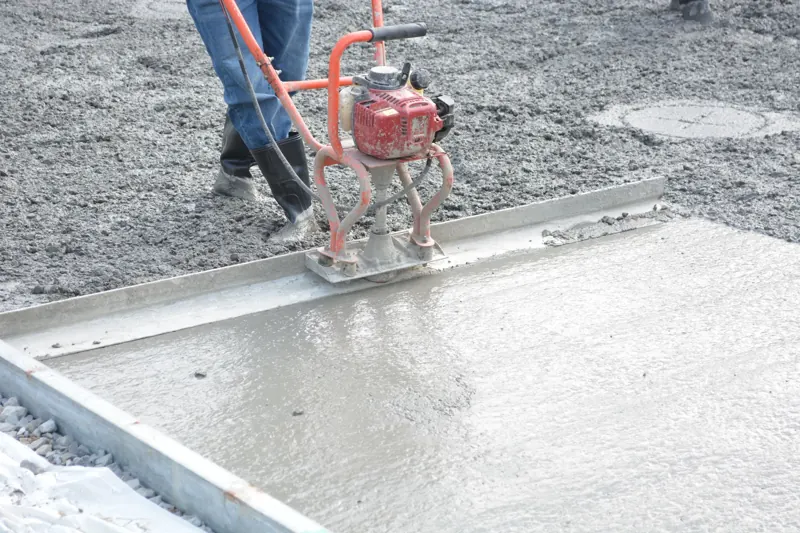
Wire mesh on a standard 4-inch drive, rebar where the slab goes to 5 or 6 inches for trucks or trailers. The truck arrives, we place, screed and float.
- 5
Finish, joints and cure
Broom finish for grip, or the decorative finish you chose. Control joints are cut on a planned layout so cracks happen where we want them. Then the slab is cured and protected.
- 6
Back in use
Walk on it the next day in most weather. Park on it after about a week; we tell you the exact date for your pour.
Options and finishes
Standard broom finish
Plain gray, broom-textured for traction. The most cost-effective driveway and the one most of our customers choose.
Exposed aggregate
The stone in the mix is revealed for a textured, slip-resistant surface that hides dirt and tire marks.
Stamped or colored
Integral color, borders and stamped patterns for a driveway that matches a stone or paver look. See our stamped concrete page.
Thicker slabs for heavy vehicles
5 to 6 inches with rebar for RVs, trailers, work trucks and anything over about 12,000 pounds.
Extensions and turnarounds
A third parking space, a widened entry or a turnaround pad, matched to the existing slab's height and finish. See our guide on how to extend a concrete driveway.
What's in our estimate
Every estimate is written, itemized and free. For concrete driveways it covers:
- Removal and haul-away of the old surface, if there is one
- Grading and a compacted gravel base
- Forms, reinforcement, the concrete and the pour
- Control joints, finish and curing
- The apron at the street, and the permit for it where your city requires one
What moves the price
- Square footage and thickness
- Whether an old driveway has to come out
- Slope, drainage and how much grading the lot needs
- The finish: broom, exposed aggregate, color or stamping
- Apron and curb-cut permit requirements in your city or county
- Access for the concrete truck
National price ranges, with sources, are in our cost guide. Your written estimate is the real number for your site.
Working in Georgia's weather
Our summers are hot enough to change how we schedule and cure a pour, and north Georgia gets enough freezing nights in winter that we plan cold-weather protection from December to February. Every city page shows the local numbers and what we do about them. Permits differ from one city or county to the next; we tell you which apply and pull them as part of the job.
Why homeowners choose us
A written estimate you can compare
Thickness, base depth, reinforcement and finish are spelled out line by line, so you can hold any other quote against it.
One call, then a date
We call back to confirm the details, usually the same business day, and book the visit at a time that suits you. No chasing.
Insured crews, permits pulled
General liability insurance on every job, the certificate with your estimate, and we pull the permits your city or county requires.
Frequently asked questions
How thick do you pour a driveway?
+
4 inches for cars and SUVs, on a compacted gravel base. If you park trucks, RVs or trailers, we go to 5 or 6 inches with rebar. The thickness is written on every estimate.
Do I need a permit for a new driveway in Georgia?
+
Often for the apron where the driveway meets a public street, and in some cities and counties for the whole driveway. We tell you what applies and pull the permit as part of the job.
How long until I can park on it?
+
A common planning range is 7 days for passenger cars, longer in cold weather or for heavy vehicles. We give you the release date for your pour.
Can you just resurface my old driveway?
+
If the slab is sound, yes: an overlay runs about $3 to $10 per square foot nationally. If it is heaving, deeply cracked or sitting on a washed-out base, we replace it. We tell you which one honestly at the estimate.
What to have ready
None of it is required to send the request. It just makes the callback shorter and the estimate more accurate.
- The property address, so we can check the permit office and get the right crew
- Rough dimensions: pace it out, or size it with our concrete calculator
- What it's for: cars, a work truck, a hot tub, a shed, foot traffic
- A couple of photos of the area and the route a concrete truck would take
- Anything you've noticed about water: puddles, a downspout, a low corner
- When you'd like it done